A new coaching offer, winter wisdoms and the SELT stocking filler

by Ruth Jarvis
SELT Team
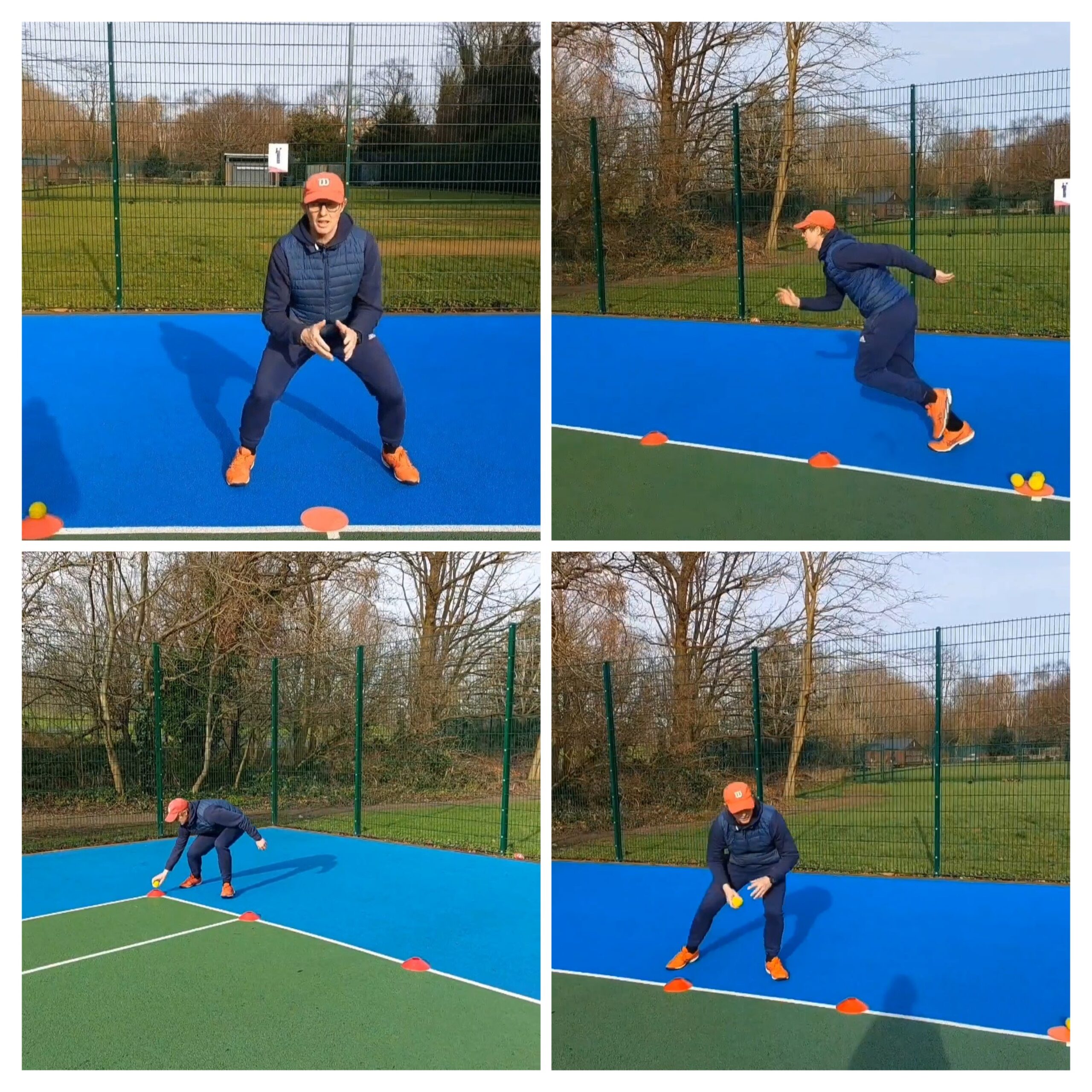
Improving your strength and conditioning (S&C) really raises your game, and we’ve recently introduced group sessions for our young performance players, led by coach Ed Parker. Ed also offers one-to-one strength and conditioning classes for players of all ages and levels: Ruth Jarvis finds out what S&C could do for you.
What does S&C mean in recreational tennis?
Strength is the ability to produce or absorb force. Conditioning is the physical (and mental) preparation you need to be able to perform the sport, task or skill to the desired level.
When we think about tennis, we tend to think about shot-making. S&C works on the main components of fitness that you need to perform not only during but also between the shots. It helps you get to the ball quickly and efficiently, with more time to select and make your shot and more power to apply to it. Give yourself a better chance of winning points with dream shots – the fun stuff!
Can you break that down a bit for me?
First, speed. Your ability not just to accelerate, but to decelerate, to stop and to change direction. Then, balance, and agility – how you change your movement in response to a stimulus – usually the ball! With those, you can get into the right position to make the shot, with the correct form, and then take off again.
S&C also works on power, but with tennis we’re talking not just how much force you can create, but how quickly you can create it. So if we’re looking at serves or smashes we work on the turn of the hip and the use of the legs.
And endurance, not in the marathon-running sense but in the ability to perform explosively and with speed and power and then recover between points and games, and maintain that level of performance whether it’s for 50 minutes or two or three hours.
What kind of things do you do in your sessions?
It depends on the person. We’ll have an ongoing conversation about your goals, your general fitness, your tennis and sport background, injury history… all of these will shape the classes. For an older person, for example, you may need to work on range of motion. But typically, we might work on foot patterns with the agility ladder, some hopping drills, work on weight transfer with a medicine ball.
What kinds of improvements do your clients notice?
It’s really personal, of course, but one says that his opponents have told him he’s hitting harder and moving faster and even compared him to an elderly Alcaraz because he’s always getting to the ball! Another says he’s producing more power, staying in rallies longer and not feeling as sore!
What tennis level do you need to be to benefit from S&C?
Everyone should be incorporating speed and balance drills as well as strength work in their regular fitness routine – too many people work the gym machines and lose their natural movement. Because I’m a PT too, my S&C classes can either be pitched to be more like a gym-based, general fitness routine or look more like tennis. So any level – though the best way to learn tennis as a young beginner is just to play.
Is there any actual tennis involved?
It needs to look like the real thing, so bring a racket. We’ll incorporate it into some of the exercises. But S&C works alongside tennis coaching; it doesn’t replace it.
🎾 SELT coach Ed Parker is an experienced personal trainer with a Level 4 qualification in Strength and Conditioning and a Sports Science degree from Brunel University. You can contact him here.
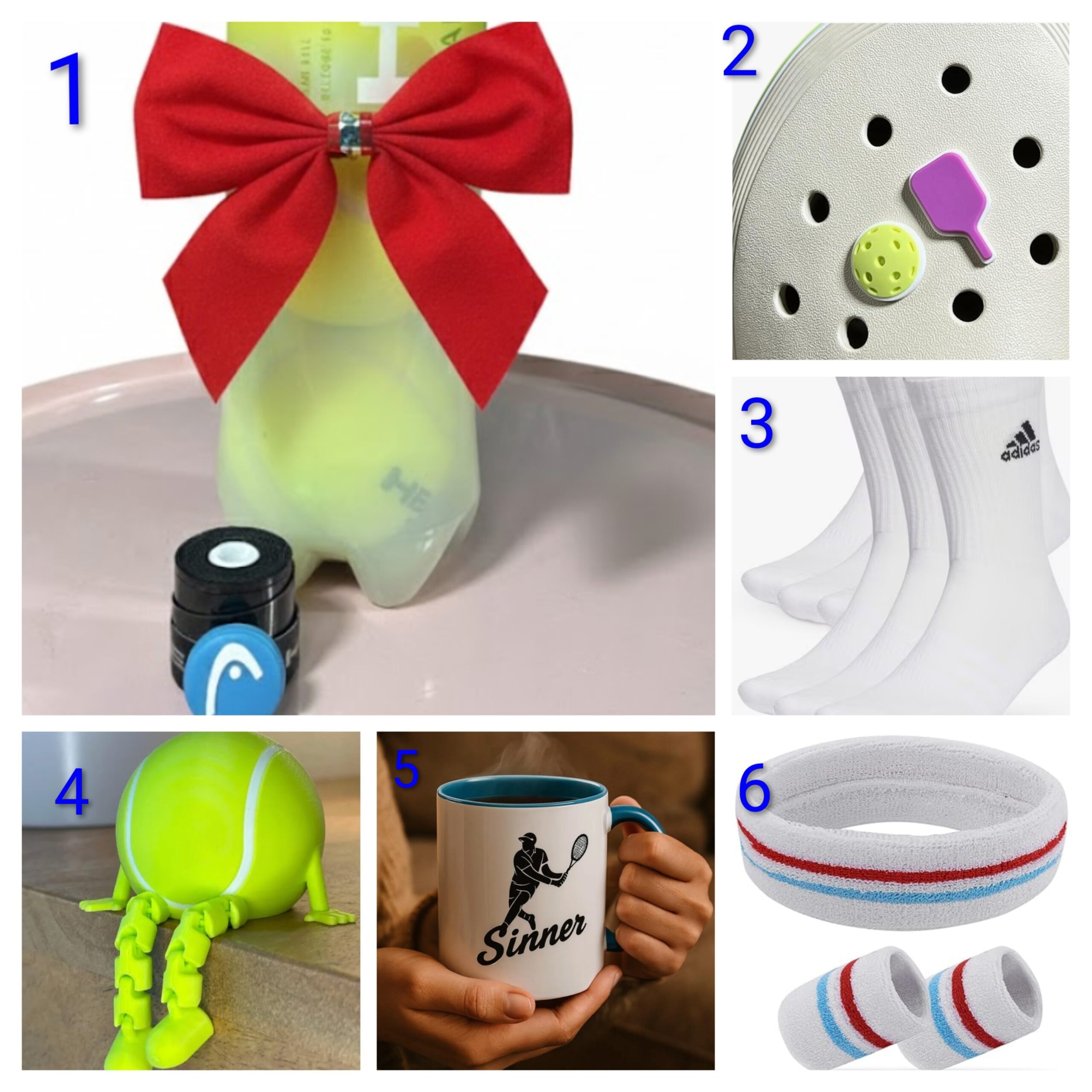 1 We’ve put together the perfect gift set for you. Order SELT’s Christmas Stocking Filler online and we’ll hand it over in a seasonal gift bag (collection only). Contains four Head Team balls, an overgrip and a dampener.
2 Pimp your ride (well, walk!) with these tennis and pickleball Crocs charms from Amazon
3 There’s no such thing as too many sports socks, and this Adidas pack has six cushioned pairs at a bargain price
4 Etsy has unique gifts from the cute Desk Dancer…
5… to the cool Sinner mug
6 Go retro with this bargain head- and wristband set, £3.99 from Amazon. Yes, we can be serious!
There are loads of good reasons to change your overgrip. You might want to use a thicker (or thinner) tape for better fit in your hand or a cushioned tape to reduce vibration, or choose a colour or material that suits your style. And when you’ve found the right grip, you’ll need to replace it more frequently than you might think – the LTA suggests every five to ten hours of play. If it’s started to look manky, it’s probably not doing its job. But fear not: grips aren’t expensive, and they’re a doddle to apply once you get the hang of it, as SELT coach Ali Robinson demonstrates.
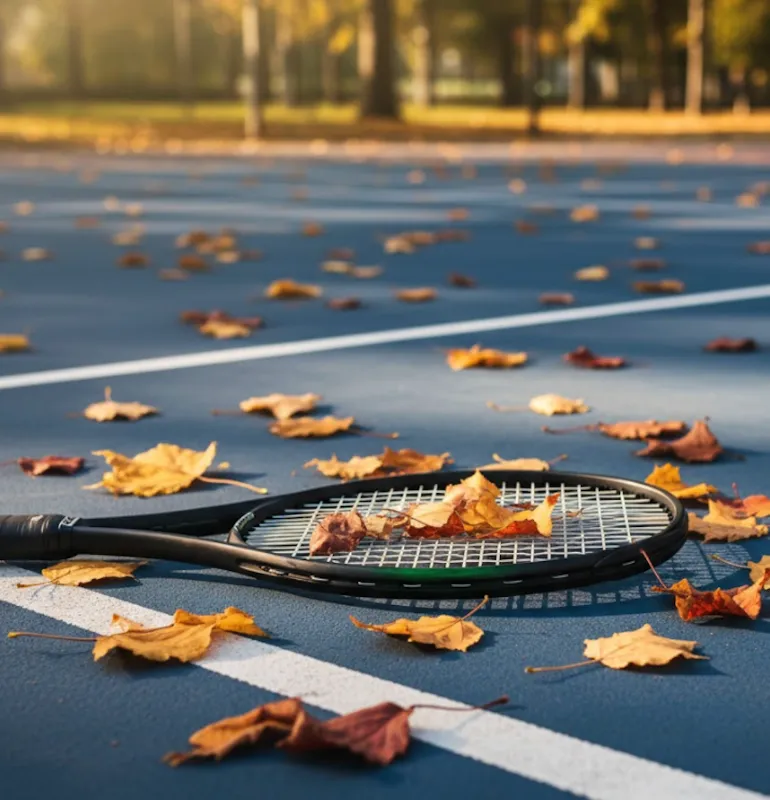
The leaves have fallen, and the temperatures, too, but pull on a hoody and a hat, and tennis is a great way to enjoy a winter’s day outdoors and keep the exercise (and your spirits) up even when things are feeling a little gloomy. You’ll just need to take a couple of precautions to keep up with the climate.
Check the soles of your tennis shoes: you’ll need a reliable grip around mushy leaves and on a frosty or wet surface. If in doubt, put a new pair on your Christmas list, or take advantage of, the Black Friday and January sales. Before you start play, check the footing on and around court, including the white lines. On cold days, it’s important to warm your body up properly to protect against injury. You need to get the blood flowing to your muscles, so do a bit of cardio (like skipping) to get your heart going and follow with some dynamic stretches.
On court, adjust your shots in high winds. Use a lower ball toss for serve, topspin if the wind is behind you, and hit higher over the net into the wind. In cold conditions, the ball bounces lower, making dropshots and slices more effective.
As the winter solstice approaches, the sun is low on the horizon and prone to beaming into your eyes like a searchlight at the crucial point of your serve (particularly at Ladywell). Experiment with sunglasses and a long-brimmed cap and in casual play consider changing ends every game so no-one is serving into the sun.
🎾 New research on exercise during pregnancy is emerging all the time. The latest is that resistance training ‘alone, or as part of a multicomponent intervention, has significant health benefits’, according to a BMJ review.
🎾 Meanwhile, a scientific consensus is developing that in more extreme endurance events, such as ultra running and ultra cycling, women’s performance is converging with men’s, and even exceeding it. Studies suggest women’s muscles may be more resistant to fatigue and damage. (That’ll be what gets you through pregnancy and labour, then…)
🎾 A recent Australilan study has found that high-intensity interval training (HIIT) produces a particularly high level of myokine proteins, which can neutralise or kill cancer cells. Says senior author Robert Newton: ‘The key message is that exercise is not just a nice add-on to conventional cancer therapies; it’s increasingly being recognised as a first-line treatment in its own right.’
🎾 BBC docs Chris and Xand van Tulleken discover the health benefits of nature in a recent podcast special, with guest Baroness Kathy Willis pointing out how the smells, sights and sounds of nature create beneficial biological pathways scientifically proven to do as good a job as prescription drugs for various health conditions. It’s fascinating, and it’s here.
That’s us signing off for 2025. Thanks for sharing a great year of tennis in Lewisham – and see you on court in ’26.

Website by Dan Stevens